Remarkable Advancements of Vietnam's Automotive Industry in the Last 5 Years
Remarkable Advancements of Vietnam's Automotive Industry in the Last 5 Years
The morning sun at the MPC Port in Hai Phong glinted off the metallic surfaces of 999 electric SUVs. These vehicles, wrapped in protective film, rolled steadily onto the Silver Queen, a massive transport vessel bound for North America. This scene, occurring in late 2022, signaled a profound shift in Southeast Asian manufacturing dynamics. A decade ago, the idea of a Vietnamese-branded car competing on the global stage seemed like a distant fantasy. Today, it is a recorded reality that defines the rapid evolution of the domestic industrial landscape.
As an analyst covering this region for eight years, I have witnessed many false starts in local manufacturing. Many nations try to build a national car and fail due to market saturation or lack of capital. Vietnam, however, chose a different path by focusing on the aggressive transition from assembly to full-scale production. The last five years represent the most volatile yet productive era in the history of Vietnamese transport technology. This transformation was not accidental but driven by a combination of private ambition and strategic government intervention.
From Assembly to Authentic Manufacturing: The 5-Year Shift
For decades, the Vietnamese automotive market relied heavily on Complete Knock Down (CKD) kits. Foreign brands shipped components to local plants to avoid high import taxes on completely built units. Local workers performed the final assembly, but the intellectual property and high-value components remained abroad. This model provided jobs but did not foster a genuine domestic technological base or a robust supply chain. Around 2018, the narrative began to change as local conglomerates started investing in heavy industrial infrastructure.
The shift was characterized by a move toward original equipment manufacturing (OEM) and deep localization. Instead of just tightening bolts, Vietnamese firms began investing in stamping shops, engine assembly lines, and research centers. According to public reports, the goal was to increase the localization rate from a mere 10% to over 40%. While achieving this has been difficult for passenger cars, the progress in the last five years is notable. The industry moved from a passive recipient of technology to an active participant in global supply chains.
This period also saw a significant consolidation of the domestic market. Consumers began to view locally manufactured or assembled cars with increasing confidence and pride. The "Made in Vietnam" label moved from being a sign of budget constraints to a symbol of modern industrial capability. This psychological shift among the Vietnamese middle class provided the necessary demand to sustain massive factory investments. Without a strong domestic market, the export ambitions of these companies would likely have failed in their infancy.
The Rise of VinFast: A Case Study in Rapid Industrialization
No discussion of Vietnam's automotive progress is complete without analyzing VinFast’s unconventional trajectory. In 2017, the company began converting a 335-hectare swamp in Hai Phong into a state-of-the-art manufacturing complex. By 2019, they were delivering internal combustion engine (ICE) vehicles to customers, a timeline that surprised many global analysts. However, the most significant move occurred in 2022 when the company announced a total pivot to electric vehicles (EVs). This was a high-risk strategy aimed at bypassing the century-long lead of traditional automakers.
The Hai Phong factory currently utilizes highly automated lines with over 1,200 robots performing welding and painting tasks. This level of automation ensures consistency and allows the facility to scale production for both domestic and international markets. VinFast has successfully launched multiple EV models, including the VF e34, VF 8, and VF 9, targeting different segments. Their export strategy has expanded beyond the United States to include European markets like Germany, France, and the Netherlands. This expansion requires meeting some of the world's most stringent safety and environmental regulations.
Beyond vehicle assembly, the company has focused heavily on the battery ecosystem. They established VinES to research and produce lithium-ion batteries, reducing reliance on external suppliers. This vertical integration is a key insight: in the EV era, the battery is the heart of the industrial value chain. By controlling battery production, a manufacturer can better manage costs and supply chain disruptions. This strategy mirrors the approaches of global leaders like Tesla and BYD, tailored for the Vietnamese context.
Traditional Powerhouses: Thaco and Hyundai Thanh Cong
While VinFast captures many headlines, traditional players like Thaco and Hyundai Thanh Cong have quietly expanded their footprints. Thaco (Truong Hai Auto Corporation) has transformed the Chu Lai Economic Zone into a multi-brand manufacturing hub. They assemble vehicles for Kia, Mazda, Peugeot, and recently added BMW to their local production lineup. Their ability to manage multiple international partnerships demonstrates a high level of operational maturity and logistical expertise.
Thaco’s strategy focuses on creating a "supporting industry ecosystem" within their industrial park. They produce seats, wire harnesses, and plastic components not just for their own cars but for export. This diversification has made them a critical pillar of the Vietnamese economy and a major regional player. Their success shows that high-quality assembly can coexist with the development of a localized parts industry. This dual approach helps stabilize the automotive sector when global market conditions fluctuate or demand shifts.
Hyundai Thanh Cong (TC Motor) has also seen substantial growth, consistently ranking among the top sellers in Vietnam. Their factory in Ninh Binh has undergone multiple expansions to meet the rising demand for models like the Accent and Creta. According to public reports, their partnership with Hyundai involves significant technology transfer and localized engineering. This collaboration has helped Hyundai maintain a dominant market share while contributing to the local manufacturing skill base. The competition between these three giants—VinFast, Thaco, and TC Motor—has been a primary driver of innovation.
Government Policy: The Catalyst for Growth
The Vietnamese government has played a decisive role in shaping the automotive landscape through targeted policies. One of the most impactful measures was Decree 116, which set strict requirements for automotive manufacturing and imports. While controversial at its inception, it forced companies to invest more seriously in local facilities rather than relying on imports. This was followed by various tax incentives for companies that achieved high localization rates or invested in green technology. The state’s vision is clearly focused on making Vietnam an automotive hub for the ASEAN region.
The most radical policy shift occurred with the introduction of EV registration fee exemptions. For a period of three years starting in 2022, the registration fee for battery electric vehicles was reduced to 0%. This significantly lowered the "on-the-road" cost for consumers, making EVs competitive with traditional gasoline cars. Additionally, the government has offered corporate income tax breaks for projects in the automotive supporting industries. These financial levers have encouraged both domestic and foreign investors to commit long-term capital to the country.
However, policy consistency remains a concern for many international investors. Rapid changes in tax structures or import duties can disrupt long-term business planning for capital-intensive industries. The government is currently working on a more comprehensive roadmap for the automotive industry through 2030. This plan aims to balance the needs of traditional manufacturers with the urgent requirement for a green energy transition. Clearer regulations regarding battery recycling and grid integration will be the next frontier for legislative development.
Charging Infrastructure: The Backbone of the EV Transition
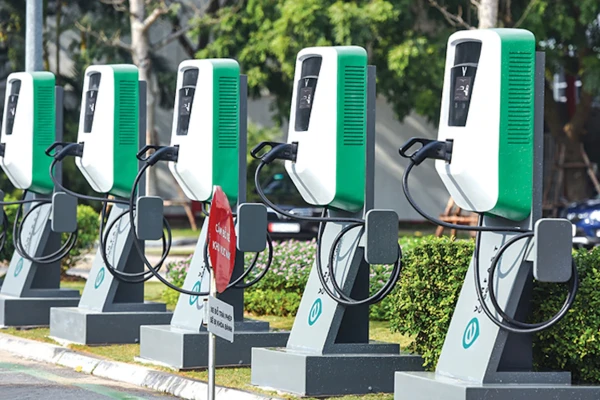
A car is only as useful as the energy network that supports it. In the last five years, Vietnam has seen an unprecedented rollout of vehicle charging infrastructure. VinFast has led this charge, aiming to install approximately 150,000 charging ports across all 63 provinces. This network covers highways, shopping malls, apartment complexes, and office buildings. Such a massive undertaking was necessary to alleviate "range anxiety," which is the primary barrier to EV adoption globally.
The growth of charging infrastructure has also opened doors for third-party providers and international technology firms. Companies specializing in fast-charging hardware and software are increasingly looking at the Vietnamese market. This creates a secondary industry focused on energy management and smart grid technology. As more electric buses and taxis enter service in major cities like Hanoi and Ho Chi Minh City, the demand for high-power charging hubs will continue to rise. This infrastructure is not just for private cars but serves as the foundation for a modern, electrified public transport system.
One real example of this progress is the "Green SM" taxi service, which exclusively uses electric vehicles. Within its first year of operation, it deployed thousands of cars and built a dedicated charging network to support them. This practical application demonstrates that the infrastructure is robust enough to handle high-utilization commercial fleets. The data gathered from these fleet operations is invaluable for optimizing future charging station placements and grid load management. It proves that the transition to electric mobility is feasible even in a developing economy.
The Evolving Parts Supply Chain
For a country to be a true automotive power, it must produce more than just the final product. The supporting industry in Vietnam has seen a steady influx of global suppliers in recent years. Japanese and South Korean firms, such as Denso and LG, have established or expanded their presence to serve local manufacturers. These Tier 1 and Tier 2 suppliers bring with them advanced manufacturing techniques and global quality standards. Their presence forces local Vietnamese suppliers to upgrade their capabilities to remain competitive.
| Component Category | Localization Status | Primary Players |
|---|---|---|
| Chassis & Body | High (40-60%) | Thaco, VinFast, Gestamp |
| Electrical Systems | Medium (20-30%) | Yazaki, Sumitomo, Furukawa |
| EV Batteries | Emerging (Variable) | VinES, Gotion High-Tech |
| Interior Trim | High (50-70%) | Local SMEs, Toyota Boshoku |
The table above reflects the uneven but steady progress of localization across different sectors. While simple parts like seats and plastic trim are highly localized, complex components like engines and semiconductors are still largely imported. The challenge for the next five years is to move up the value chain into high-tech components. This requires significant investment in human capital and R&D facilities. Several universities have recently launched dedicated automotive engineering programs to address the growing need for specialized talent.
Remaining Challenges: Market Size and Competition
Despite the remarkable progress, the Vietnamese automotive industry faces substantial headwinds. The domestic market, while growing, remains relatively small compared to Thailand or Indonesia. With annual sales hovering around 400,000 to 500,000 units, it is difficult to achieve the economies of scale needed for low-cost production. This makes Vietnamese-made cars vulnerable to price competition from imported vehicles, especially those from countries with zero-tariff agreements. To survive, local manufacturers must look toward export markets to increase their production volumes.
Another challenge is the intensifying global competition in the EV space. Chinese manufacturers like BYD and Wuling are entering the Vietnamese market with highly competitive pricing. These companies benefit from massive scale and a mature supply chain back in China. Vietnamese firms must find a way to differentiate their products through branding, after-sales service, or unique features. Furthermore, the global shift toward protectionism and fluctuating trade policies can complicate export strategies to the US and Europe. Navigating these geopolitical waters requires a high degree of diplomatic and commercial flexibility.
The Outlook for the Next Decade
The trajectory of the last five years suggests that Vietnam is no longer a peripheral player in the automotive world. The country has established a solid foundation in both traditional assembly and future-oriented EV technology. The focus is now shifting toward sustainability and smart mobility solutions. We can expect to see more integration between automotive manufacturers and technology firms specializing in autonomous driving and connectivity. The "Software Defined Vehicle" (SDV) is becoming the new benchmark for competitiveness.
Vietnam’s commitment to achieving net-zero emissions by 2050 will continue to drive the electrification of transport. This goal provides a long-term policy anchor that gives investors confidence in the direction of the market. As the charging network expands and battery costs decrease, the transition will likely accelerate. If the country can continue to improve its supply chain and labor productivity, it has a genuine chance to become a major global exporter. The journey from a swamp in Hai Phong to the streets of California was just the beginning.
Frequently Asked Questions
1. Why did VinFast stop making gasoline cars so quickly?
VinFast pivoted to focus entirely on electric vehicles to capitalize on the global green energy transition. By skipping the refinement of aging ICE technology, they aimed to compete directly with global leaders in the emerging EV market. This allowed them to allocate all R&D resources toward battery technology and software integration.
2. How does the quality of Vietnamese cars compare to Japanese or Korean brands?
Vietnamese-assembled cars for brands like Toyota, Hyundai, and Kia must meet the global quality standards of their parent companies. For domestic brands like VinFast, they utilize components from reputable global suppliers (like Bosch and ZF) and highly automated production lines. While brand prestige takes decades to build, the technical build quality is increasingly comparable to international peers.
3. Are electric cars practical for long-distance travel in Vietnam?
Yes, the practicality has improved significantly due to the massive rollout of charging stations. With chargers available at most highway rest stops and major cities, traveling from Hanoi to Da Nang or Saigon is now feasible. Most modern EVs offer a range of 300-500km per charge, which covers the typical daily driving needs of most Vietnamese users.
4. Will car prices in Vietnam decrease in the future?
Prices are influenced by taxes, production volume, and component costs. As localization rates increase and production scales up, there is potential for price reductions. However, high special consumption taxes and infrastructure fees remain significant components of the final price. The shift to EVs currently offers some relief through registration fee exemptions.
The automotive industry is more than just manufacturing; it is about the safe and efficient movement of people. As the industry advances, the demand for professional transport services also grows. For those who want to experience the comfort of modern vehicles without the stress of driving, GOCheap provides a reliable designated-driver and chauffeured service across Vietnam. Their focus on safety and professional service perfectly complements the nation's journey toward a more sophisticated and modern automotive future.